



I'm going to be real with you: when I started making digital planners back in 2018, I had no idea it would turn into a full-time business. I just loved the product. But the digital planner space on Etsy has exploded since then, and there are now people making everything from a few hundred dollars a month to serious full-time income selling digital planners.

So how does it actually work? Let me break it down.
The Basic Model: Design Once, Sell Forever
This is the magic of digital products. You design a planner once — invest maybe 20 to 40 hours creating something really polished — and then you sell that same file over and over again with zero additional work per sale.
There's no printing, no shipping, no inventory. Someone buys your planner on Etsy, they get an automatic download, and the money hits your account. You could sell 1 copy or 1,000 copies of the same file and your workload doesn't change.
That kind of leverage is rare. It's why so many people are drawn to digital products.
What Do Digital Planners Sell For?
Pricing varies a lot depending on the complexity of the planner and how established the seller is, but here's a rough range:
- Simple single-planner listings: $5–$15
- Full annual planners with multiple layouts: $15–$35
- Bundles or planner + sticker kit combos: $25–$60
- Niche planners (fitness, budget, homeschool, etc.): often command premium pricing
The sellers doing the best aren't necessarily the ones with the most products — they're the ones who've built trust, have strong visuals, and have figured out Etsy SEO so their listings actually get found.
How Much Can You Actually Make?
This varies wildly and I want to be honest with you rather than throw out fantasy numbers. A brand new shop with one or two listings might make $50–$200/month in the beginning. An established shop with a strong catalog, good SEO, and repeat customers can make several thousand dollars a month.
The key variables are: how many listings you have, how good your product photography is, how well you've researched your keywords, and how much you invest in growing outside of Etsy (Pinterest and email lists are huge for digital product sellers).
Beyond Etsy: Other Places to Sell
Etsy is a great starting point because it has built-in traffic, but smart digital planner sellers don't stop there. A lot of people also sell through:
- Their own Shopify store (higher margins, you own the customer relationship) — it's how I run my own planner shop
- Payhip or Gumroad (simple digital delivery platforms)
- Their own website with a download system
Having your own store alongside Etsy gives you protection against algorithm changes and fee increases — both of which happen regularly on Etsy.
The Biggest Thing Standing Between Most People and Their First Sale
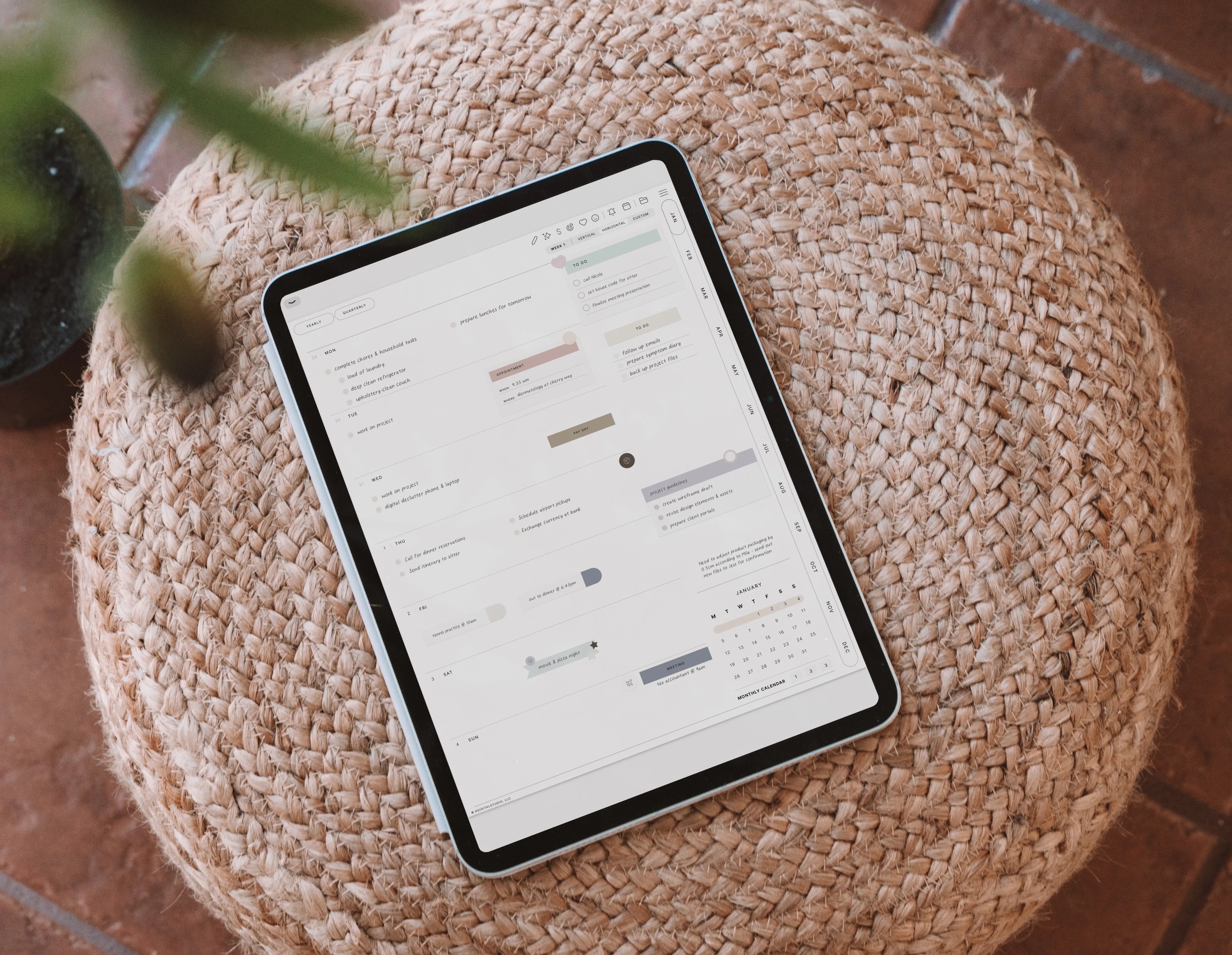
Honestly? It's not the marketing or the SEO or even the photography. It's having a product that's actually good. A digital planner with broken hyperlinks, blurry graphics, or a layout that doesn't make sense in GoodNotes won't get good reviews — and without good reviews, Etsy won't show your listing to anyone. (This is why getting your hyperlinks right matters so much.)
The technical foundation of your planner — clean vector graphics, properly working hyperlinks, well-structured navigation — is what makes the difference between a product that converts and one that sits there with no sales. It starts with choosing the right design app.
That's exactly what Digital Planner Design Lab teaches. I'll show you how to design a professional-quality digital planner from scratch using InDesign or Affinity — one that's actually ready to sell, not just pretty to look at.
Share:
Is Digital Planner Design Lab Right for You? Here's Who It's For